
About
I’m Jieyi Deng, a Data Scientist based in Seattle.
Most of my work has been around problems that are not clearly defined at the beginning. Sometimes the data is messy. Sometimes the metric is wrong. Sometimes the real question is different from the question people first ask.
That is probably why I still like working with data. For me, the interesting part is not only building a model or producing an analysis. It is figuring out what the problem actually is, what evidence we can trust, and what decision the data can support.
How I got here
I started my career working on risk and catastrophe analytics at GEICO. A model there was not useful just because it had good validation metrics. It eventually had to help someone estimate losses, understand risk, or make an operational decision. That was probably my first lesson that data science is always connected to a real system outside the model.
At Tencent, I moved closer to recommendation systems and user behavior. I worked on propensity modelling, churn prediction and data infrastructure. The problem was no longer just predicting an outcome. User behavior kept changing, the data kept changing, and the system had to keep learning with it.
Later at miHoYo, I worked on user growth, advertising measurement and attribution. That changed my view of data work again. A lot of important problems were not really machine learning problems. They were measurement problems: whether two campaigns were actually comparable, whether a conversion signal meant what we thought it meant, whether attribution data was complete, and whether a performance change was real or just caused by how we measured it.
My recent work has focused on agentic systems at an AI startup, where I have been building the analysis and reasoning layer behind an Ads Agent. In some ways, this work connects many of the same problems I have been dealing with for years: data quality, measurement, reasoning, and turning analysis into something people can actually use.
What AI changed for me
AI has changed how I spend my time as a Data Scientist.
Tasks that used to take a lot of time, such as cleaning data, writing repetitive SQL or Python, checking transformations, and doing an initial exploration of a dataset, can now move much faster with AI.
For me, the biggest change is not that AI can do data science for us. It is that I can spend less time on these repetitive parts of the workflow and more time on problems that require deeper thinking: defining the right question, deciding what should be measured, thinking through causal relationships, testing assumptions, and understanding what the data can actually tell us.
My recent work on agentic analytics systems has made this distinction even clearer. AI can help write code and move an analysis forward, but it does not remove the need for a reliable analytical process. Metric definitions still need to be correct. Data still needs to be validated. Comparisons still need to make sense. And sometimes the right conclusion is simply that the available data is not enough to answer the question.
This has changed how I think about the role of a Data Scientist. I used to associate the job more closely with the technical work of analyzing data and building models. Those skills still matter, but AI is making some parts of that work much faster.
What becomes more important is knowing where to spend the extra time: on problem framing, measurement, causal inference, experimentation, and the judgment needed to turn an analysis into something we can actually trust.
I still call myself a Data Scientist. I just think AI is changing what deserves most of our attention.
Outside work
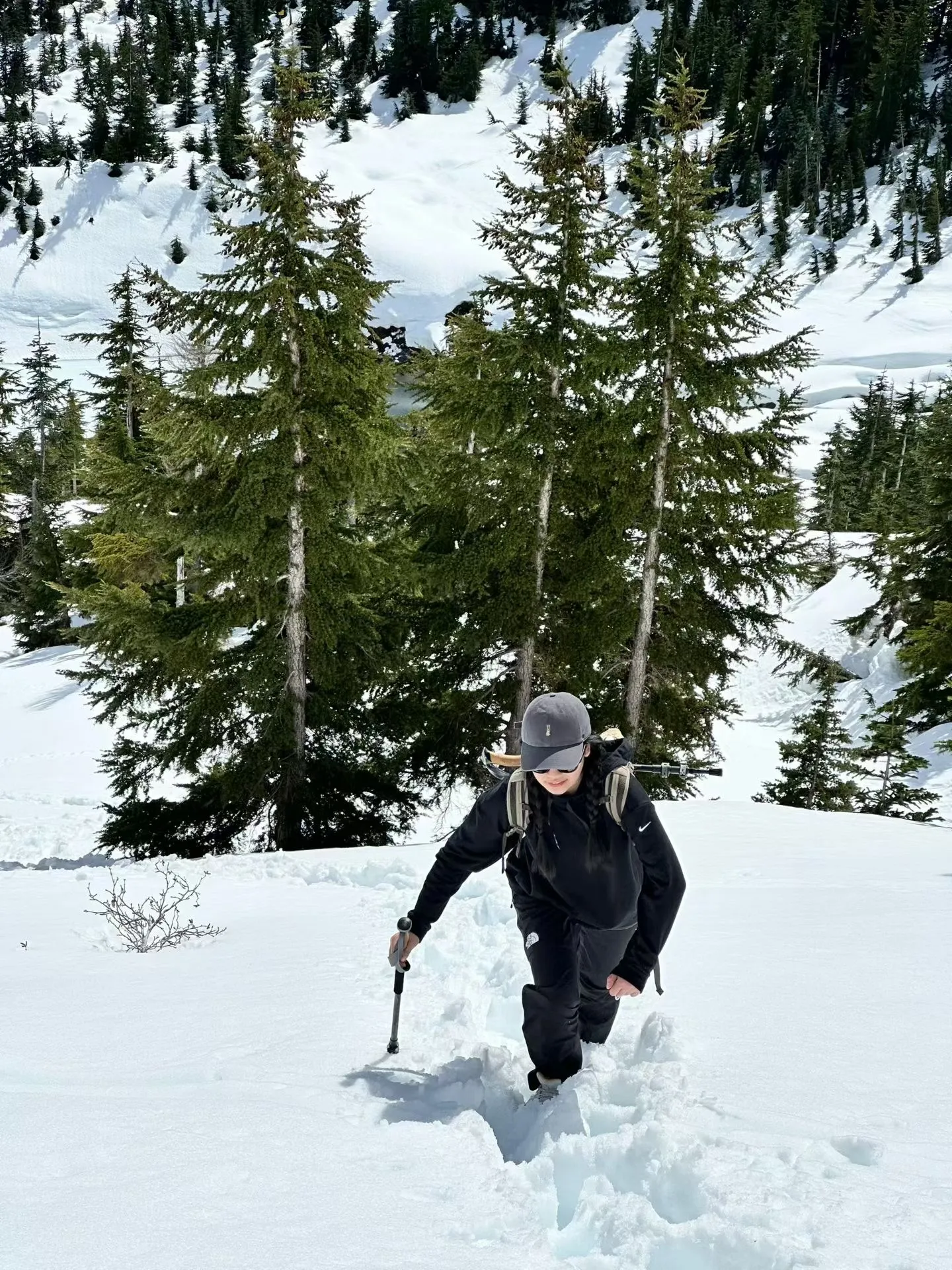
Seattle is home for now, which mostly means Mount Rainier appears in an unreasonable share of my camera roll. Outside work, I like going to Edmonds to stare at the water and let my mind wander, hiking nearby trails when the weather cooperates, catching Pokémon around the city, and occasionally jumping out of airplanes.